

The Ultimate Guide to Using a Social Signals Checker
A social signals checker is a tool that automatically keeps tabs on mentions of your brand, your competition, and specific keywords floating around social media and the web. Think of it as your digital ear to the ground, listening to all the online chatter about your business and turning that noise into useful insights.
What Are Social Signals and Why They Matter

Picture the internet as one giant, never-ending party. Social signals are the buzz in the room—the whispers, cheers, and casual conversations happening about your brand. They’re the sum of all the likes, shares, comments, upvotes, and mentions your content gets on platforms like X (formerly Twitter), LinkedIn, and Reddit.
Every one of these interactions is like a tiny vote of confidence or a piece of direct feedback from the public. A single "like" might not seem like much on its own, but when you add up thousands of them, they start to paint a really clear picture of your brand’s health, how popular it is, and whether it’s connecting with people.
A social signals checker is simply the tool that pulls all this scattered data together and makes sense of it for you.
The Real Impact of Social Conversations
For a long time, most people wrote these signals off as simple engagement metrics—nice to have, but not critical. That view is completely outdated. Today, we know they're direct indicators of how your audience sees your brand, what kind of content actually works, and where your market is headed next.
Social signals are no longer just vanity metrics; they are the pulse of your market. Monitoring them is like having a real-time focus group that tells you what’s working, what isn’t, and where your next big opportunity lies.
This constant flow of feedback is invaluable for a few key areas of the business:
- Reputation Management: You can spot negative comments the moment they appear and handle them before they blow up into a full-blown crisis.
- Customer Sentiment: Get a gut check on the overall feeling—positive, negative, or neutral—people have about your brand or a new campaign.
- Lead Generation: Pinpoint potential customers who are actively looking for solutions or are publicly complaining about a competitor's product.
- Competitive Intelligence: See exactly how you measure up against others in your space by looking at their share of voice and how people are engaging with them.
To get a clearer picture, let's break down the different kinds of signals and what they tell you.
Types of Social Signals and Their Business Impact
This table breaks down the main categories of social signals and what they actually reveal about your brand's position in the market and what your customers think.
| Signal Type | What It Measures | Business Insight |
|---|---|---|
| Engagement Signals | Likes, shares, comments, upvotes, retweets. | How well your content resonates with your audience. High engagement means you're creating value. |
| Share of Voice | Your brand mentions vs. competitor mentions. | Your brand's visibility and authority within your market. Are you leading the conversation? |
| Sentiment Analysis | The emotional tone (positive, negative, neutral) of mentions. | The overall perception and health of your brand. Are customers happy, frustrated, or indifferent? |
| Intent Signals | Phrases like "looking for," "recommendation for," "alternative to." | Immediate sales opportunities. These are clear buying signals from people actively in the market. |
By tracking these different types, you move from just seeing that people are talking to understanding what they're saying and why it matters for your bottom line.
A Growing Digital Megaphone
The need for a social signals checker is only getting bigger because of the massive scale of social media. We're looking at a projected 5.42 billion global social media users in 2025, which is 67% of the world's population. The volume of these conversations is just staggering.
In the U.S. alone, 100.7 million people shopped on social channels in 2024, and a whopping 82% checked out reviews and social proof before they even considered making a purchase. You can dig deeper into these trends over at Talkwalker.
Ignoring this massive feedback loop is like trying to run a restaurant with the doors shut and soundproof walls. You're completely missing what your customers are saying, what they really want, and why they might be choosing to go somewhere else. Tuning into these signals gives you a serious leg up in a crowded market.
How to Check Social Signals: A Practical Guide

Alright, let's move from theory to action. Checking for social signals doesn't have to be some complex, drawn-out process. You can actually start with some simple manual checks and then bring in more powerful tools as you get the hang of it.
The easiest way to dip your toes in is by using the search bars on social platforms themselves. Think of X (formerly Twitter), LinkedIn, and Reddit as massive, real-time databases of what people are thinking and saying. Just search for your brand name, products, or even your competitors, and you'll get an instant snapshot of recent conversations.
This hands-on approach is perfect for quick spot-checks. But let's be honest, it's not built for the long haul. It's like refreshing your email every five seconds hoping for a message instead of just getting a notification when something important actually lands. For something a bit more structured (and still free), Google Alerts is a great next step.
Getting Started with Manual Monitoring
With Google Alerts, you can set up notifications for keywords tied to your brand, your industry, or the competition. Google will then shoot you an email digest of new mentions it finds across the web, pulling from news sites, blogs, and forums.
The settings are straightforward, letting you control how often you get alerts, the sources you want to watch, and the quality of the results. It's a simple way to get a basic stream of social signals sent right to your inbox.
But while these manual methods are a decent starting point, they get overwhelming fast. You'll end up spending more time sifting through noise than finding anything you can actually use. This is exactly where a dedicated social signals checker becomes a game-changer, acting as your 24/7 listening post.
The Power of an Automated Social Signals Checker
An automated tool does all the heavy lifting for you, scanning millions of sources around the clock. These platforms have become essential, with the social listening market projected to jump from $9.61 billion in 2025 to a staggering $18.43 billion by 2030. It's no surprise—brands using these tools see real results, with some cutting their crisis response time by up to 50%. You can dig into more of these trends over at Sprinklr.
When you're looking at different social signal checkers, you want features that turn a flood of raw data into something you can actually act on.
A great tool doesn't just show you mentions; it tells you which ones matter. It prioritizes conversations by analyzing sentiment, intent, and context, so you can focus on opportunities that drive revenue and protect your brand.
Here are a few key features to keep an eye out for:
- Real-Time Notifications: Get instant alerts in your email or Slack the moment a critical keyword pops up. This lets you jump on a conversation immediately.
- Sentiment Analysis: The tool should automatically tag mentions as positive, negative, or neutral. This gives you a quick read on public perception without having to read every single post.
- Competitor Tracking: Keep tabs on what people are saying about your rivals. You can spot their weaknesses and find unhappy customers who might be looking for a better option.
- Intent Recognition: This is huge. The best tools can pinpoint high-intent phrases like "looking for recommendations for..." or "does anyone know an alternative to [competitor]?" These are basically warm leads served up on a platter.
These features are what shift you from passively monitoring to proactively strategizing. For a deeper look at putting this into practice, check out our guide on how to track social signals effectively. By automating the grunt work, you can focus your energy on what you do best: talking to potential customers and managing your brand's reputation with precision.
Key Metrics To Track With Your Social Signals Checker
Just counting brand mentions is like trying to understand a football game by only looking at the final score. It tells you who won, but you miss the entire story of how it happened. To really get what people are saying about your brand, you need to look past the raw numbers and dig into the quality and context of those conversations.
A great social signals checker does exactly that. It turns a firehose of raw data into actual business intelligence by zeroing in on a handful of critical metrics.
Think of it like a pilot's cockpit. The altimeter (mention count) is important, sure, but you also need the attitude indicator (sentiment) and the airspeed (engagement) to know if you're flying straight and have enough momentum. These deeper metrics give you the real story.
Measuring Your Market Presence
One of the most powerful metrics you can track is Share of Voice (SOV). This tells you exactly how much of the conversation in your industry belongs to your brand versus your competitors. It’s a direct measurement of your brand's visibility and authority.
For instance, if there are 1,000 total mentions about your industry online in a given week, and your brand gets mentioned 250 times, your SOV is 25%. Tracking this metric over time shows you if your marketing is actually grabbing more attention or if a competitor is starting to eat your lunch.
Understanding Audience Perception
Next up is Sentiment Analysis. This metric sorts mentions into positive, negative, or neutral categories, acting as a real-time pulse check on your brand's health. A sudden spike in negative sentiment can be the canary in the coal mine—an early warning of a product bug, a customer service breakdown, or a looming PR crisis.
Imagine a software company pushes a new update. If their social signals checker suddenly flags a surge of negative posts tagged with "new update," the product team can jump on the bug and fix it before it tanks their reputation. This kind of proactive monitoring is a huge part of effective brand health tracking, letting you get ahead of problems.
Sentiment analysis isn’t just about putting out fires; it’s about finding kindling. A wave of positive sentiment around a new feature tells you exactly what to double down on in your next marketing push.
Gauging Content Effectiveness
Finally, you have to track engagement and reach to see if your content is actually landing with your audience.
- Engagement Rate: This is all about the interactions—likes, shares, comments, and retweets. It shows you if your audience is actively participating with what you're putting out there. A competitor’s post with sky-high engagement might just reveal a market trend you can jump on.
- Reach: This metric tells you the total number of unique people who see your content. It helps you understand the potential size of your audience and how far your message is spreading.
To get a better handle on the true value your audience gets from your content and which signals really matter, it’s worth digging into the nuances of social media engagement metrics.
The right metrics transform a simple social listening tool into a strategic command center. Below is a quick breakdown of the most important metrics and what they mean for your business strategy.
Essential Social Signal Metrics and Their Strategic Value
| Metric | What It Tells You | Strategic Action |
|---|---|---|
| Share of Voice (SOV) | How your brand's visibility stacks up against competitors in your industry. | Increase marketing spend or pivot messaging if SOV is dropping. Analyze competitor strategies if their SOV is rising. |
| Sentiment Analysis | The overall emotional tone (positive, negative, neutral) of conversations about your brand. | Address negative sentiment spikes immediately to mitigate PR crises. Amplify positive trends in marketing campaigns. |
| Engagement Rate | How actively your audience is interacting with your content (likes, shares, comments). | Replicate high-engagement content formats and topics. Analyze competitor content that performs well to find gaps. |
| Reach | The total number of unique individuals who have seen your content or mentions. | Use high-reach content to inform your paid media strategy. Identify influencers or topics that expand your audience. |
| Mention Volume | The raw number of times your brand is mentioned over a specific period. | Track spikes to correlate with marketing campaigns, product launches, or news events to measure immediate impact. |
By combining these metrics, you stop just listening and start understanding. You get a complete, actionable picture that can guide everything from product development to your next big marketing campaign.
Turning Social Signals Into Sales Opportunities
Just tracking social signals is one thing, but the real magic happens when you turn all that listening into a reliable way to generate revenue. This is where the data you’ve collected gets turned into actual sales conversations. By building a clear workflow, your team can start to systematically find, qualify, and jump on high-intent conversations happening online every single day.
The first step is to get really clear on what a "high-intent" signal actually looks like for your business. These aren't just random brand mentions; they are bright, flashing signs that someone is actively in the market for exactly what you sell.
Identifying High-Intent Buying Signals
Think of high-intent signals as digital breadcrumbs that potential customers are leaving for you to find. A good social signals checker cuts through all the noise online and helps you zero in on these specific phrases and conversations.
You should be looking for signals like:
- Recommendation Requests: People posting things like, "Does anyone know a good CRM for a small business?" or "Looking for recommendations for project management software."
- Competitor Frustration: Comments you might see are, "Just spent an hour on the phone with [Competitor]'s support. Is there a better alternative out there?"
- Problem-Awareness Questions: Users asking for help with a specific problem your product solves, like, "How do I automate my team's weekly reporting?"
These kinds of signals are basically open invitations to start a conversation. Once you spot them, the next step is to have a system ready to act on them quickly and effectively.
From Signal to Sales: A Step-by-Step Workflow
Let’s imagine a SaaS company called "SyncUp" that sells a team collaboration tool. Their social signals tool flags a post on X where someone says, "Our current project tool is so clunky. We need something simpler that integrates with our other apps."
Here’s how SyncUp’s workflow kicks into gear:
- Qualify the Signal: Someone on the marketing team takes a look at the post. The user’s profile shows they’re a manager at a mid-sized tech company—a perfect match for SyncUp's ideal customer. The signal is immediately flagged as a qualified lead.
- Route to Sales: That lead gets automatically pushed to the sales team's Slack channel, complete with a link to the original post and the user's profile.
- Craft Personalized Outreach: A sales rep, now armed with all the context, writes a helpful, non-pushy reply: "Hey [User], saw you're looking for a simpler tool. Many teams switch to us for our clean interface and integrations. No pressure, but here's a quick demo if you're curious."
This whole process can be visualized as a simple flow, moving from initial reach down to a specific strategy.
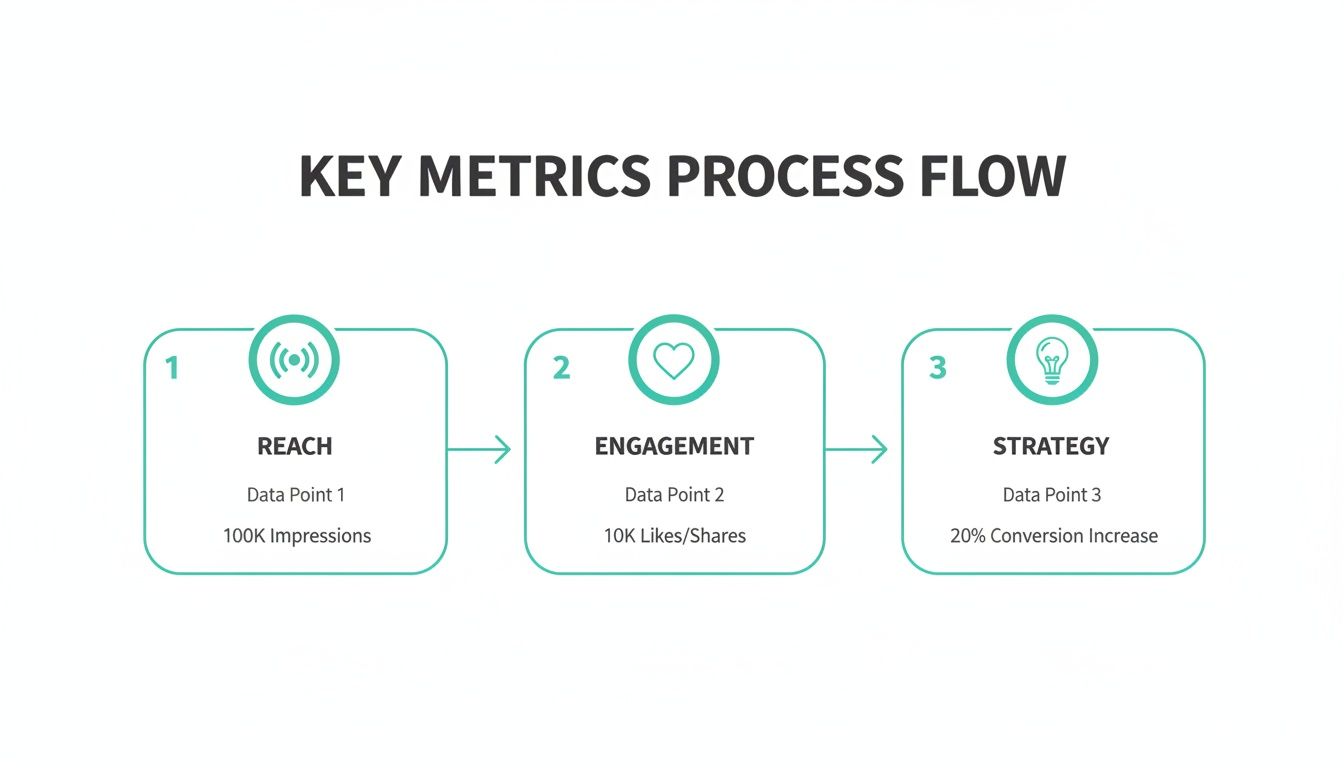
This visual breaks down how a broad audience reach gets narrowed down to specific engagement, which then feeds into a targeted outreach strategy.
This kind of approach draws a straight line between listening and growing your business. For a deeper look at turning social engagement into real results, check out this comprehensive guide to effective social selling. When you start treating social signals as warm leads, you can build a powerful and consistent pipeline. You can also learn more about lead generation from social media in our dedicated article.
Weaving Social Signal Checking Into Your Workflow
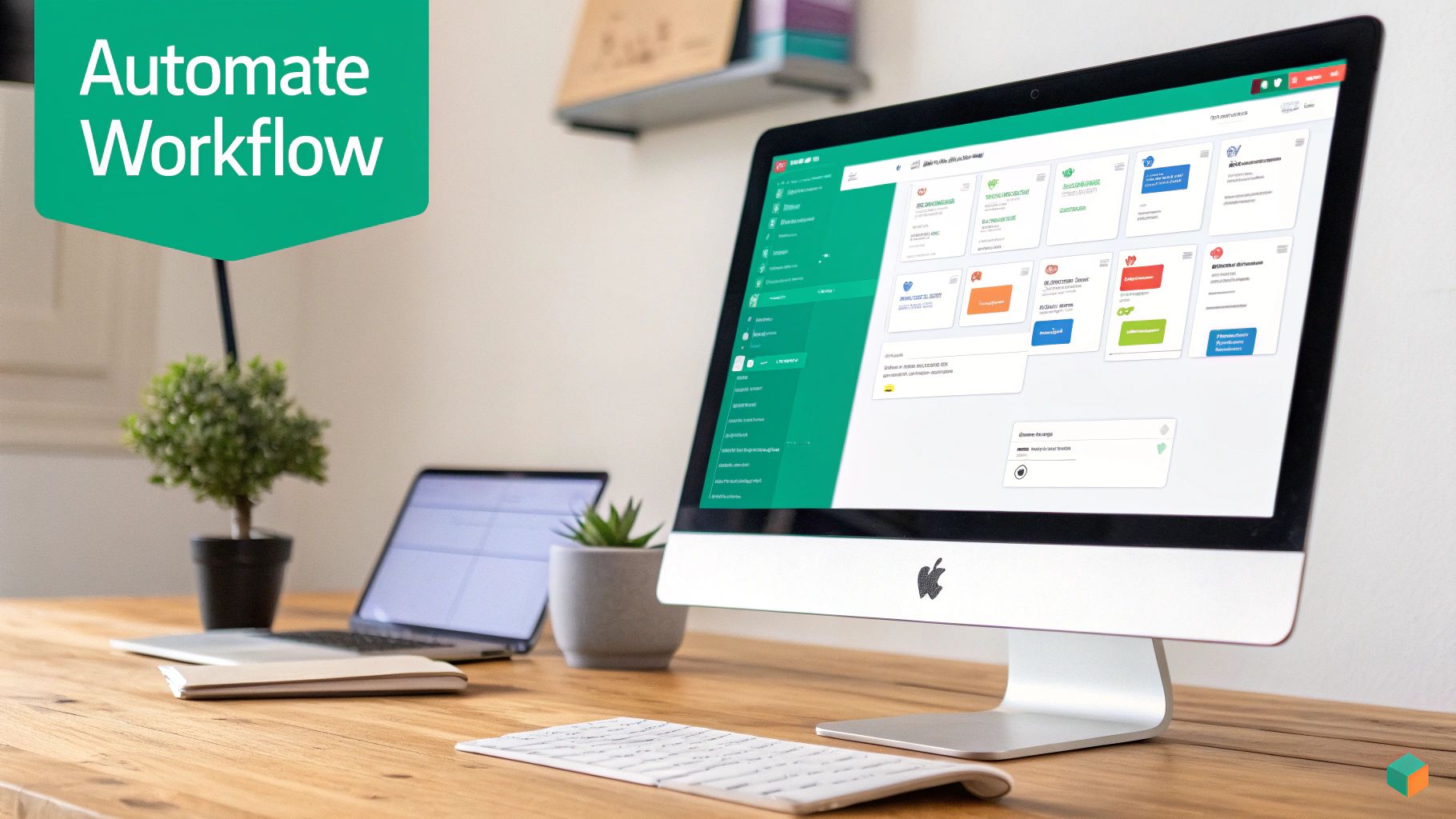
To really get the most out of social listening, it needs to become a daily habit, not just something you do when you have a spare moment. The real magic happens when you move past random manual searches and plug social signal monitoring directly into your team's day-to-day operations. It’s all about building a repeatable system that catches, qualifies, and acts on conversations as they happen.
Think of it like building a production line. Raw materials (social mentions) come in one end, go through a refinement process (qualification and enrichment), and come out the other side as finished products (warm leads and real insights). Without that structure, you’re just piling up raw materials in a corner, hoping you’ll get around to them eventually. A dedicated social signals checker is the machinery that makes this whole pipeline run on its own.
Automating the Lead Generation Pipeline
Modern tools can connect every step of this process, shifting your strategy from reactive to proactive. The goal is to create a seamless flow of information that gets rid of manual data entry and makes sure no opportunity slips through the cracks. This automated workflow usually has a few key stages.
The process starts by capturing the right signals and ends with those signals landing right in front of your sales or marketing teams, ready for them to take action.
- Signal Capture: The system constantly scans platforms like LinkedIn, X, and Reddit for the keywords and intent phrases you’ve set up.
- Data Enrichment: When a promising signal pops up, the tool can automatically add valuable context, like the person's job title, company, and other useful contact details.
- CRM and Platform Integration: The enriched lead is then pushed straight into your CRM, sales engagement platform, or even a dedicated Slack channel, complete with all the context needed for immediate action.
By automating the workflow, you’re not just saving time; you're building a scalable engine for growth. It ensures that every high-intent signal is acted upon with speed and precision, dramatically increasing your team's efficiency and conversion rates.
This is what separates the teams that casually glance at mentions from those who systematically turn online conversations into revenue. Instead of manually copying and pasting information from one platform to another, your go-to-market team gets a steady, organized stream of qualified leads. This frees them up to do what they do best: building relationships and closing deals. The right social signals checker doesn’t just find leads; it delivers them.
A Few Common Questions
Once you start digging into social signals, a few questions always seem to pop up. Let's tackle some of the most common ones that come up when teams move from theory to actually putting this stuff into practice.
How Do Social Signals Affect SEO Rankings?
This is a big one. While likes and shares aren't direct ranking factors for Google, they create a powerful ripple effect that gives your SEO a serious indirect boost.
Think of it like a popular new restaurant. The buzz and long lines outside (your social signals) don't directly make the food taste better (your ranking). But that buzz definitely attracts food critics and magazine articles (backlinks), and those absolutely improve the restaurant's reputation and ranking in the city.
High social engagement gets your content in front of more eyeballs, which drives more traffic to your site. That increased exposure raises the odds of earning valuable backlinks from other websites—and backlinks are a huge, direct ranking factor. Social signals act as the catalyst, amplifying your content's reach and authority.
Social signals don't tell search engines how to rank you, but they tell people what's worth paying attention to. When people pay attention, search engines notice the side effects, like more traffic and backlinks.
What's The Difference Between A Social Signals Checker And A Social Media Management Tool?
It's a common point of confusion, but the difference is actually pretty simple: one is for talking, the other is for listening.
A social media management tool (like Buffer or Hootsuite) is all about publishing your own content and managing your brand's official profiles. A social signals checker, on the other hand, is built to listen to the entire web. It tracks conversations about your brand, competitors, and industry happening anywhere online, not just on your own pages.
That wider net is exactly what helps you find hidden sales opportunities and potential reputation threats before they blow up.
How Often Should I Check For Social Signals?
There's no single right answer here—the ideal frequency depends entirely on what you're trying to accomplish. You'll want to tailor your check-in schedule to the task at hand.
- For Reputation Management: You need real-time monitoring, period. A negative comment can snowball in a hurry, so automated alerts that ping you instantly are non-negotiable.
- For Lead Generation: A daily check-in is super effective. This routine allows you to consistently find and act on fresh buying signals before they go cold.
- For Market Research: A weekly review is usually plenty. This cadence is perfect for spotting broader trends, seeing what competitors are up to, and getting a feel for shifts in customer sentiment over time.
The most important thing is just being consistent. Make checking your signals a real part of your workflow, not just something you do when you remember.
Can I Track Social Signals For My Competitors?
Yes, and you absolutely should. Keeping tabs on competitors is one of the most strategic ways to use a social signals checker. When you tune into the conversations happening around your rivals, you can gain a massive competitive edge.
Monitoring your competitors helps you:
- Identify Customer Pain Points: Find people publicly complaining about a competitor's product or service. These are some of the warmest leads you'll ever find.
- Analyze Their Marketing: See which of their campaigns and content pieces get the most buzz. This gives you direct insight into what your shared audience actually cares about.
- Gain Strategic Intelligence: Uncover product feedback and feature requests that you can use to inform your own roadmap and get a jump on the market.
It's like having a direct line into their market research focus groups, giving you the intel you need to outmaneuver them.
Ready to stop guessing and start listening? Intently gives you the power to find high-intent leads across the web by turning social chatter into actionable sales opportunities. Start your journey with Intently today.