

What is Contextual Targeting: what is contextual targeting for ads?
Contextual targeting matches ads to the theme of a webpage rather than tracking personal data. It works like fitting puzzle pieces to each page, ensuring messages align with what users are reading. This method respects privacy without sacrificing relevance.
Quick Overview Of Contextual Targeting

In a privacy-first era, marketers turn to the page’s own words and structure to decide which ads belong. Contextual systems scan headlines, paragraphs and metadata as they load.
- Keyword Matching for straightforward, term-based placements
- Topic Analysis that groups content into broader themes
- Semantic Filters to grasp the underlying intent
Contextual Targeting Overview
Before we dive deeper, here’s a quick snapshot of how contextual targeting delivers relevant ads without personal data:
| Aspect | Details |
|---|---|
| Matching Process | Real-time evaluation of page keywords, topics and tone |
| Privacy Compliance | Operates without cookies or any personal identifiers |
| Relevance | Aligns ads with page meaning and the reader’s inferred needs |
| Channels | Display, video, audio and native ad formats |
| Flexibility | Topic lists and filters update dynamically |
This table highlights how ads stay on point and off-data, delivering the right message at the right moment.
The screenshot below shows how Google Ads configures contextual targeting settings.
You can see options for topic targeting, language controls and sensitivity settings—tools that place your ad where it truly belongs.
Why Contextual Ads Matter
Contextual ads sidestep cookies and third-party trackers. Instead, they rely on page cues to match audience interests in real time.
- Privacy-Friendly Placement respects consent and streamlines compliance
- Context-Driven Relevance boosts engagement by matching current interests
Thanks to browser changes phasing out third-party cookies, this approach has moved into the spotlight. Major platforms like Google Ads and Amazon Ads now plug contextual signals into their brand-safety toolkits.
Next Steps
Up next, you’ll explore concepts and techniques that bring contextual targeting to life:
- A deep dive into semantic analysis techniques
- Side-by-side comparison with behavioral targeting
- Measuring KPIs such as viewability and CTR
- How to set up advanced context filters in Google Ads
This foundation sets you up to craft campaigns that honor privacy and deliver real results. As topic taxonomies evolve, your ads stay sharp and in sync with fresh content.
When privacy and relevance unite, everyone wins.
Understanding The Key Concepts
Think of landing on a web page like opening a book. Each page is its own chapter, rich with specific themes and ideas. Contextual targeting reads that chapter instead of mining a reader’s history.
This analogy shows how ads sync up with page content in real time—no past browsing needed.
Early Keyword Matching And Category Tags
In the early days, ad platforms worked much like a basic search: they looked for exact words on a page.
A travel brand might bid on “backpacking” or “hotel deals,” while finance companies hunted for “investment” or “retirement.”
Over time, broad category labels emerged, grouping pages under themes like Sports or Technology.
- Keyword Matching places ads next to exact or related terms.
- Category Targeting uses page labels to hit general topics.
- Basic Filters block off sensitive areas for brand safety.
Advances With Artificial Intelligence
As machine learning improved, systems stopped counting words and started understanding meaning.
Semantic models can tell the difference between “apple” the fruit and “Apple” the company without breaking a sweat.
That deeper layer of analysis cuts out irrelevant impressions and lifts engagement rates.
“Semantic analysis transformed contextual targeting by understanding intent, not just terms.”
Privacy Regulations Accelerate Contextual Evolution
By the late 2010s, browsers and new laws phased out third-party cookies. Advertisers needed a way to stay effective—and respect privacy.
Enter contextual targeting: a cookie-free method that hooks ads to page topics, keywords, and themes instead of user IDs.
Discover more insights about contextual targeting on Google support.

This view highlights how advertisers tune topic selection, keyword inputs, and sensitivity settings for precise placement.
Why Contextual Targeting Gained Traction
Privacy-first rules like GDPR and CCPA prompted brands to reallocate budgets. Contextual solutions answered the call.
Across display, video, audio, and native ads, these models stitch together keyword, topic, and semantic signals at scale.
You can learn more about segmenting audiences via content signals by reading our guide on audience segmentation.
- Privacy Compliance requires no personal identifiers or cookies.
- Scalable Reach works effectively across multiple channels.
- Real-Time Relevance aligns ads with what users are reading right now.
From Keywords To Semantic Filters
The path from simple term matching to AI-driven context is a story of continuous refinement.
Each phase—keyword lists, category tags, tone detection, semantic disambiguation—has sharpened placement accuracy.
For instance, a travel ad can safely appear next to “backpacking gear” while steering clear of “travel advisories.”
This precision not only improves user experience but also safeguards brand reputation.
Integration With GTM Tools
Social listening platforms like Intently add another layer to contextual setup.
By tracking live conversations on Reddit, LinkedIn, or niche forums, you spot emerging themes before they trend.
These insights feed into your keyword and topic filters, ensuring ads show up alongside fresh, relevant chatter.
- Real-Time Monitoring: Captures high-intent discussions as they happen.
- Dynamic Filters: Updates keyword lists and themes based on social signals.
- Automated Bidding Triggers: Translates mentions into real-time bid adjustments.
Pairing content analysis with social listening means your campaigns adapt on the fly—keeping your messaging in lockstep with audience interests.
Comparing Different Targeting Methods
Contextual targeting, behavioral approaches, and keyword-based ads each tap into a different set of signals. Think of contextual targeting as gauging the vibe of a room—scanning page content in real time. Behavioral targeting maps a user’s browsing journey, while keyword targeting zeroes in on specific terms.
Below, we’ll break down what drives each tactic, then explore when and how to use them together.
Comparison Of Targeting Methods
Here’s a side-by-side look at the core differences in data source, scale, relevance, and privacy:
| Targeting Method | Data Source | Scale | Relevance | Privacy |
|---|---|---|---|---|
| Contextual | Page content, topics, semantic signals | Medium to High | Good alignment with page themes | High privacy compliance |
| Behavioral | User profiles, cookies, browsing paths | Very High | Deep personalization | Low to Medium |
| Keyword | Page keywords, metadata | High | Exact term matches | Medium |
This table highlights why a mixed strategy often delivers the best overall performance.
Use Cases And Privacy Impact
Each method shines in its own scenario. Behavioral segments fuel retargeting; keyword ads hit niche audiences; contextual filters safeguard brand integrity.
- Contextual targeting sidesteps cookies and relies solely on page signals for higher privacy.
- Behavioral targeting brings deep personalization but must navigate compliance rules.
- Keyword targeting offers quick deployment and exact matches, though it depends on metadata.
For a deeper dive into behavioral strategies, visit our guide at Intently.
“Mixing contextual and behavioral tactics lets marketers navigate privacy needs while maximizing relevance.”
— Industry Expert
To blend these techniques smoothly:
- Define your core objective—brand safety, conversion lift, or both.
- Choose the right mix of contextual, behavioral, and keyword segments.
- Layer filters such as negative keywords, topic exclusions, and sentiment controls.
- Track key metrics like CTR, viewability, and engagement time to fine-tune.
This straightforward process helps you balance compliance with targeted impact.
Contextual Targeting Techniques
Contextual targeting actually relies on several methods:
- Keyword Matching spots exact terms in real time.
- Topic/Category Targeting groups content into broad buckets.
- Semantic Analysis reads meaning and intent.
- Signal-Based Contextualization uses page-level cues like sentiment.
Category targeting can cast a wide net but lacks pinpoint precision. On the other hand, keyword-contextual placements heighten relevance at the expense of volume. Advanced semantic engines even distinguish “apple” the fruit from “Apple” the company, slashing wasted impressions. Layering these filters boosts viewability and brand safety—without touching personal data. Read the full insights about these methods on Illumin’s guide.
The screenshot below shows the side-by-side comparison of targeting trade-offs from a leading vendor’s interface.
This interface makes it easy to see how broad category filters compare with fine-tuned semantic options, keeping irrelevant ads at bay.
Mixing Methods For GTM Success
Combining contextual, behavioral, and keyword tactics allows you to meet evolving go-to-market goals. Adjust your mix based on real-time content signals and performance data. As you iterate, you’ll find the sweet spot where reach, relevance, and privacy all align.
Benefits And Limitations Of Contextual Targeting
Think of contextual targeting as matching an ad to a page’s theme rather than tracking a user’s every move. It sidesteps privacy hurdles and plays nicely across display, video, and audio channels. On the other hand, when a finance ad lands on a page about scams, you can end up with awkward pairings—and you lose a bit of that one-to-one personalization you get from behavioral methods.
When browsers tightened cookie rules, contextual targeting bounced back. Reports from the 2020s point to double-digit increases in demand, with travel, finance, and retail all seeing noticeable lifts in click-through rates. For more on these trends, visit the Basis blog.
Teams at Mailchimp and AdRoll agree: ads that echo content intent tend to grab more attention. Whether someone is booking a trip or planning their finances, the right context makes a difference.
"Contextual relevance boosts click performance by aligning ad and article themes."
Key Benefits
Privacy-Friendly Placement
No cookies or personal data needed. You stay in line with GDPR and CCPA.Scalability Across Channels
Use the same approach for banners, in-stream video, podcasts, and native ads.Real-Time Relevance
Your ad reflects the page’s topic the moment it loads, driving stronger engagement.
The chart below shows reported year-over-year growth in contextual ad spend and engagement across key verticals.
Common Limitations
Contextual targeting isn’t perfect when the analysis is too surface-level. A basic keyword match might plop a finance ad onto a scam alert page, hurting your conversion rate.
Another drawback is that you can’t personalize at the individual level like you can with behavioral data. Ads stay relevant but often feel more generic. To bridge that gap, brands frequently layer in first-party segments.
Context Ambiguity
A simple match can confuse “apple” the fruit with “Apple” the tech company.Limited Audience Insights
No deep user profiles means less precision.Creative Constraints
Generic messages may miss the mark for highly specific audiences.
Best Practices To Mitigate Weaknesses
Layer Signals
Mix contextual filters with first-party audience segments for better targeting.Use Semantic Analysis
Bring in AI-driven content understanding to cut down on mismatches.Apply Negative Filters
Block unwanted keywords and sensitive topics to protect your brand.Test And Iterate
Run A/B tests on different creatives to find what truly resonates.
Balancing these strengths and weaknesses will give you a solid, privacy-friendly campaign without sacrificing scale.
When To Layer Additional Signals
Contextual targeting shines on niche or thematic sites but can stumble when topics blur. Adding first-party data or social listening insights tightens relevance and cuts wasted spend. For instance, using Intently’s real-time trend tracking helps your filters catch timely conversations.
- Monitor social chatter daily for emerging terms and niche discussions.
- Sync CRM segments to zero in on known audiences.
- Update negative filters on the fly as new topics pop up.
By combining context with extra signals, you keep things private and still see those CTR gains and strong brand matches.
Real World Use Cases Of Contextual Targeting
Contextual targeting is all about timing. It’s like placing an umbrella stand right outside a shop on a rainy day—ads appear exactly when they matter most.
Below, we’ll look at three formats—display banners, in-stream video, and dynamic audio—and see how live campaigns used real-time triggers (weather alerts, sports scores, you name it) to boost engagement.
- Display Banners that change based on page content and local signals.
- In-Stream Video ads synced to live topics or events.
- Dynamic Audio spots served when specific audio or external cues hit the mark.
Beyond these basics, social listening tools like Intently sharpen your context signals, helping you catch trends as they emerge.
Display Banner Examples
A travel brand treated local weather as its creative director. When rain clouds rolled in, banners swapped to umbrella ads. The result? A 25% lift in click-through rate during storm warnings versus standard placements.
“Contextual banners triggered by weather saw engagement spike immediately.”
Here’s how they kept it rolling:
- Combine weather triggers with page-level topic analysis.
- Use Intently signals to spot peaks in related chatter.
- Rotate creatives when new themes emerge, sustaining that initial surge.
In another campaign, an e-commerce site watched back-to-school buzz on education articles. Whenever Intently spotted a spike in “school supplies,” their banners flipped to highlight seasonal deals—keeping relevance high and clicks steady.
In-Stream Video Use Cases
Picture this: A sportswear brand inserting 15-second ads into live match highlights. By matching ads to team mentions and score changes, they achieved an 18% increase in view-through rate.
“Real-time topic-matching in video raised brand lift by 32%.”
Because this taps into the excitement around current events, the ads feel less like interruptions and more like part of the game. Plus, it’s privacy-safe, since the targeting relies on stream context rather than personal data.
| Campaign Style | Trigger Signal | Performance Metric |
|---|---|---|
| Live Sports Ads | Game Score Shifts | 32% Lift in Brand Lift |
| News Content Ads | Breaking News Topics | 22% View Rate Boost |
Dynamic Audio Spots
A radio station dialed into weather alerts to drop store promotions into morning shows. When the mercury dipped, ads for hot drinks and cozy jackets kicked in—driving a 15% rise in coupon redemptions.
- Define audio triggers around external signals (weather, events).
- Schedule messages to match peak listening windows.
- Track coupon use and tune messages in real time.
This approach keeps ads feeling fresh and relevant without relying on personal data. To refine your triggers further:
- Feed social listening insights into your audio rules.
- Use Intently reports to fine-tune call-to-action timing.
Across these channels, context signals deliver real lifts. By weaving in social listening you adapt on the fly, meeting audiences exactly where they are.
The screenshot below from Intently shows live intent-signal tracking on trending topics.
Here you see which topics spike first—perfect for fine-tuning your context filters.
Key Takeaways
Contextual targeting works because it meets people in the moment. Whether on display, video, or audio, matching ads to environment cues drives better results.
- Use environmental triggers like weather or live scores for moment-based activations.
- Integrate Intently to monitor emerging topics and update filters instantly.
- Track metrics—CTR, viewability, conversion lift—to measure success.
For example, comparing rain-driven triggers to sports buzz can reveal your highest-impact segments. Then adjust messaging so it resonates with each unique moment.
Finally, audit your placement data weekly. Pause underperforming context filters and reallocate that budget to triggers earning the best returns.
- Review placements by region, topic, and trigger.
- Pause filters that underdeliver.
- Double down on high-engagement moments.
Implementation Steps And Best Practices
Launching a contextual campaign relies on a crystal-clear roadmap. Tie each goal back to privacy and brand-safety requirements from day one.
Begin with your ideal audience profile, campaign objectives, and safety guardrails. This trifecta guides every setup decision.
Initial Campaign Setup
First up, select broad themes—think travel or finance—before dialing into niche topics. This staged approach uncovers both mainstream and hidden pockets of interest.
- Identify Core Keywords that align with your product’s benefits.
- Allocate Budget By Channel based on expected ROI.
- Rebalance Weekly to funnel spend toward top performers.
Semantic Filter Configuration
Semantic filters dive deeper than simple word matches. They recognize context and sentiment—separating “apple” the fruit from “Apple” the tech giant.
Semantic analysis helps you dodge irrelevant or negative environments, protecting your brand.
Integrate AI-driven tools for real-time sentiment checks. Then layer in negative keywords and topic exclusions, updating your blocklist regularly to prevent off-brand placements.
Integrating Social Listening
Use Intently to catch fresh discussion threads on Reddit, X, and LinkedIn. Those real-time signals become new keywords and topics in your filters.
Define custom intent signals—product mentions, competitor chatter, or trend spikes—for sharper relevance. Integrate these social feeds before launch so filters mirror live audience interests. For deeper context, dive into our Intent Data Insights Guide.
Visual Process Flow
The infographic below lays out each step, from display banners and in-stream video to dynamic audio. It’s a quick reference you can share with your team during planning sessions.
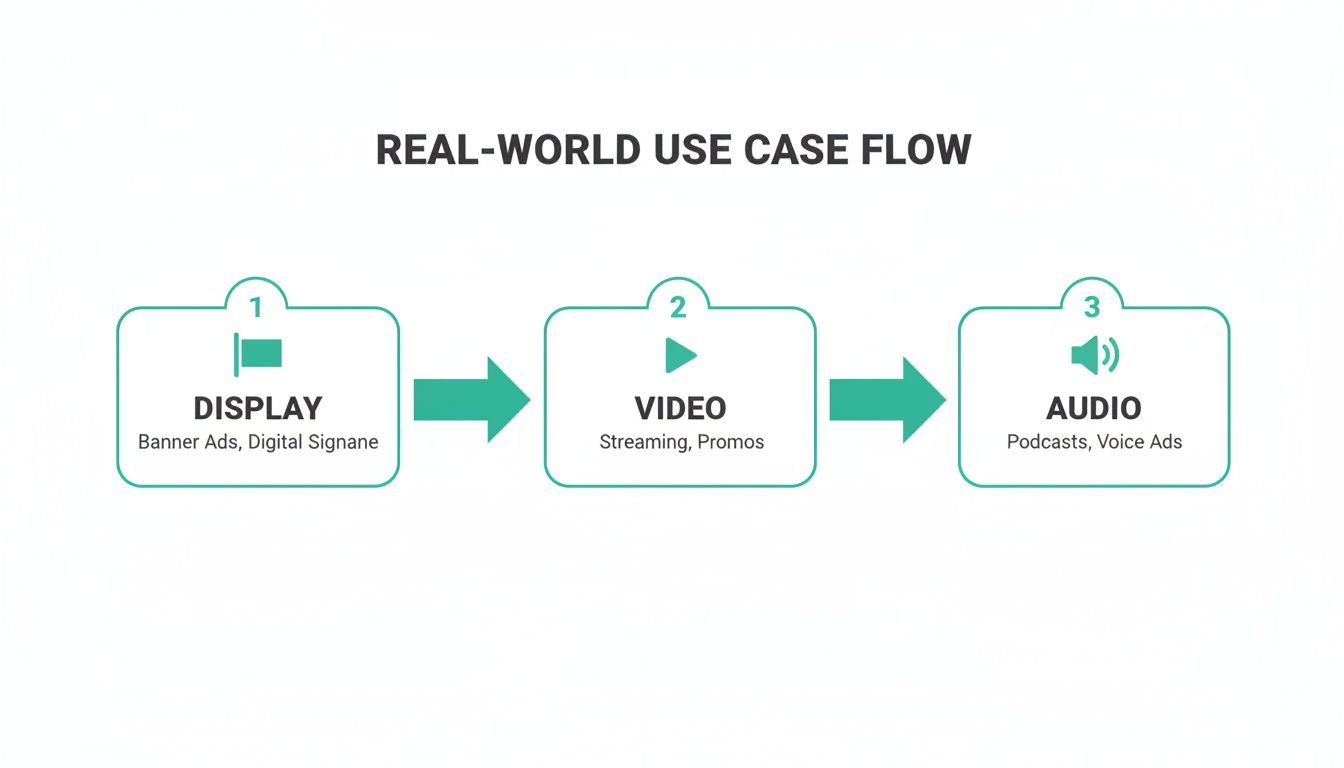
This flowchart captures channel selection, semantic filtering, social listening, and the final launch sequence. Use it as a blueprint before diving into execution.
Testing And Measurement
Once live, run A/B tests on keyword sets, topic clusters, and ad creatives. Track click-through rate, viewability, and conversion lift to see which combos win.
Use engagement time and bounce rate as proxies for contextual relevance. Then refine filters and scale up the keyword-topic-creative champions.
Platform Selection And Setup
Choose ad platforms—Google Ads, The Trade Desk—that offer advanced contextual controls and semantic analysis. Evaluate their topic depth, negative keyword tools, and bid flexibility.
Plug your campaign into a unified analytics stack for end-to-end visibility. Automate rule-based bids to shift spend instantly based on live context signals.
Best Practices You Need To Know
Audit your placements weekly, pausing any that drift off-context. Rotate keyword clusters and creative formats every few weeks to beat audience fatigue.
- Document Filter Logic: Keep rules and exclusions in a shared playbook.
- Stay Privacy-Compliant: Be GDPR and CCPA-friendly at all times.
- Cross-Functional Reviews: Align marketing, legal, and analytics for quick approvals.
Continuously refine your context filters to match evolving content trends. Leverage audience insights to build new segments, and benchmark KPIs against industry standards for quick red flags.
Maintain a shared dashboard for real-time performance updates. Test negative keywords regularly and adapt when new formats emerge.
Work with creatives to craft message variants tailored to each environment. Then store these context-driven ads in a library to speed up future launches.
Track cost per acquisition and ROI by segment. Tapping into fresh placement options can drive incremental gains. When you follow these steps consistently, you’ll build real expertise and improve ROI.
Frequently Asked Questions
What Is The Difference Between Contextual And Behavioral Targeting?
Contextual targeting lines up your ads with the page’s content in real time—think of it as placing a gardening tool ad next to a how-to-prune blog post. It reads headlines, keywords, and semantic signals without touching personal data. Behavioral targeting, in contrast, builds a profile from a user’s browsing history for deeper personalization, but today’s privacy rules can make it tricky to implement.
How Do You Measure Success In Contextual Campaigns?
Keep your eyes on click-through rate (CTR), viewability, engagement time, and conversion lift. These metrics show whether your ads are landing in the right environment. Then, run A/B tests—swap out context filters or creative assets—and refine based on which version wins.
Tracking Best Practices
- Monitor CTR daily to catch quick shifts in performance.
- Check viewability scores so you know your ads are actually seen.
- Track engagement time and conversion lift together for a full-funnel view.
“Pairing context metrics with A/B testing cuts your optimization cycle in half.”
Can Contextual Targeting Work For Niche Markets?
Absolutely. Dial in your keyword lists, define topic categories, and set negative filters to weed out off-topic pages. This approach slots your ads into the exact corners of the web where your audience hangs out—whether that’s B2B tech forums or artisanal craft blogs.
How Do Social Listening Tools Enhance Contextual Signals?
Platforms like Intently scour Reddit, X, and LinkedIn for emerging keywords and hot topics. Those insights plug into your contextual filters, so you capture fleeting interest peaks and serve ads alongside live discussions.
- Fuse social data with site analytics to build dynamic filters.
- Trigger real-time bid adjustments when a topic starts trending.
Use live social data to make your contextual ads feel in-the-moment.
Next Steps And Resources
For deeper insights, explore our sections on Comparing Different Approaches and Implementation Steps You Need To Know.
Ready to unlock richer context signals?
Boost campaigns now with Intently at Intently today.